🚨 Water, fire or sewage emergency in Pueblo? We answer 24/7 — call (719) 467-3672
📚 Restoration Guide
How Long Does Water Damage Restoration Take?
For most homes, structural drying typically takes about 3 to 5 days, while full restoration, including any rebuild work, often runs one to three weeks or longer. The exact timeline depends on how much water was involved, the materials affected, and how quickly the cleanup began.
Every water damage job in Pueblo is a little different, so there is no single answer that fits every home. A small kitchen leak dries far faster than a flooded basement in Belmont after a storm. Below we walk through each phase and the realistic timeframes you can generally expect.
Keep in mind these ranges are common industry norms, not promises. Your specific timeline is confirmed only after an on-site inspection, which we offer free across Pueblo County.
The phases of water damage restoration
Water damage restoration is not one task but a sequence of stages. Each stage has to finish before the next can begin. Rushing any step usually creates bigger problems later, such as trapped moisture or hidden mold.
Understanding the phases helps you set fair expectations. It also explains why two neighbors in Pueblo West can have very different restoration timelines for what looks like similar damage.
Inspection and water extraction
The first phase is inspection and assessment. A technician locates the water source, measures moisture levels, and maps how far the water traveled. This usually takes a few hours, often on the same day you call.
Next comes extraction, or removing standing water. For a modest spill this can take an hour or two. A deep basement flood may need most of a day and multiple pumps.
Acting fast here matters more than almost anything else. If you want a step-by-step guide, read our page on what to do in the first 24 hours before help arrives.
Drying and dehumidification
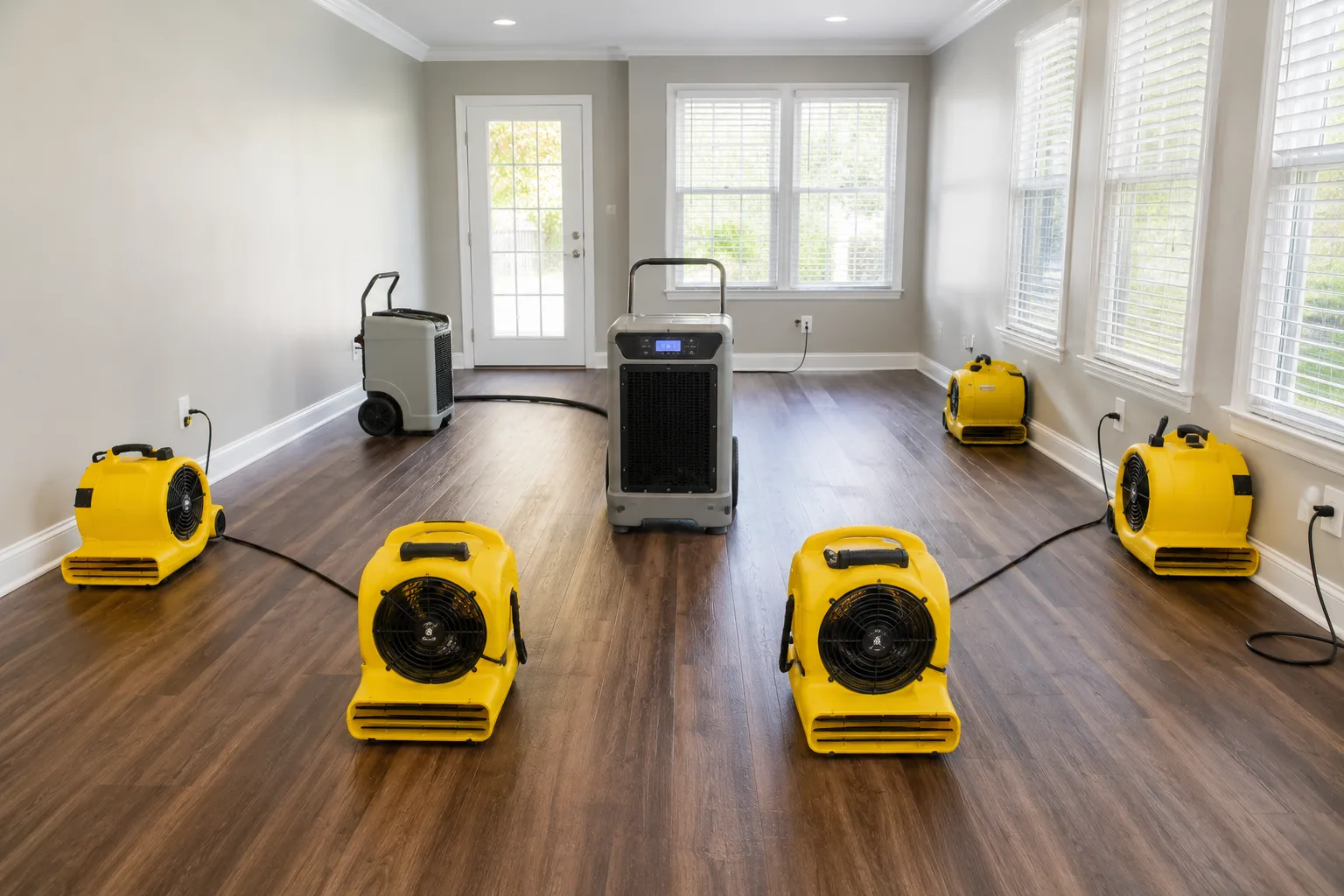
Drying is the phase most people underestimate. After the visible water is gone, moisture remains inside drywall, subfloors, and framing. Air movers and commercial dehumidifiers pull that hidden moisture out over several days.
For a typical residential job, drying usually takes 3 to 5 days. Small, well-ventilated areas can dry in 2 to 3 days. Dense materials like hardwood, plaster, or concrete can push drying past a week.
You cannot simply speed this up by adding more fans. Materials release moisture at their own pace, and forcing repairs too early traps water where mold thrives.
Do not close the walls back up until moisture readings confirm the structure is dry. Skipping this step is the most common cause of repeat damage and hidden mold problems in Pueblo homes.
Cleaning, sanitizing, and the water category
Once things are dry, we clean and sanitize affected surfaces and contents. This phase depends heavily on the water category. Clean water from a supply line is simple, while contaminated water is not.
Category 1 is clean water and cleans up quickly. Category 2, or gray water, needs more disinfection. Category 3, black water from sewage or flooding, requires the most careful handling and often removal of porous materials.
If sewage is involved, cleaning and safety steps add time. Our sewage cleanup service in Pueblo covers the extra sanitizing that dirty water demands. Cleaning generally takes one to two days depending on the contamination level.
Repairs and rebuild
The final phase is putting your home back together. This can mean replacing drywall, reinstalling flooring, painting, or rebuilding cabinets. Rebuild is where timelines stretch the most.
Minor cosmetic repairs might take a day or two. A larger rebuild involving flooring, trim, and multiple rooms can run one to three weeks. Custom materials or backordered flooring can extend that further.
Rebuild timing also depends on scheduling, permits for major work, and material availability in the Pueblo area. We coordinate this phase so drying and repairs flow together without gaps.
Typical duration by phase
Phase
Typical duration (varies by job)
Inspection and assessment
Same day, a few hours
Water extraction
1 hour to 1 day
Drying and dehumidification
Usually 3 to 5 days
Cleaning and sanitizing
1 to 2 days
Repairs and rebuild
1 day to 3 weeks or more
These ranges are general guides for planning. The only accurate estimate comes from seeing your specific damage in person, which we do at no charge across Pueblo County.
What speeds it up or slows it down
Several factors decide whether your job lands at the fast or slow end of these ranges. Knowing them helps you understand your own timeline.
How fast you acted. Water removed within hours dries faster than water that soaked overnight.
Water category. Clean water is quick; sewage and gray water add cleaning and safety steps.
Size of the area. One damp room dries far sooner than a flooded lower level.
Materials involved. Hardwood, plaster, and concrete hold moisture and slow drying.
Mold. If mold appears, remediation adds days before repairs can begin.
Weather and humidity. Damp conditions in and around Pueblo can lengthen drying time.
Why monitoring matters and why not to rush
Good restoration is measured, not guessed. Throughout drying, technicians take daily moisture readings on walls, floors, and framing. Equipment is adjusted or moved based on those numbers, not a fixed calendar.
This monitoring is why a job might finish drying in three days or need six. The structure tells us when it is truly dry. Declaring a home dry too early is the fastest route to warped floors, peeling paint, and mold.
The single best way to shorten your entire timeline is to call the moment you spot water. Fast extraction means less soaking, shorter drying, and often less rebuild. You can reach us any time at (719) 467-3672, and we offer 24/7 availability for emergencies across Pueblo, Pueblo West, Belmont, Colorado City, Avondale, and Beulah.
Structural drying usually takes about 3 to 5 days for a typical home. Small, well-ventilated areas may dry in 2 to 3 days, while dense materials like hardwood or plaster can take a week or more. Daily moisture readings confirm when the structure is truly dry.
How long does full water damage restoration take?
Full restoration, including inspection, extraction, drying, cleaning, and rebuild, often runs from a few days to three weeks or longer. The rebuild phase is what stretches the timeline most. Every job is different, so an on-site inspection gives the most accurate estimate.
Why can’t drying be sped up with more fans?
Materials release moisture at their own pace, and adding more equipment does not force it out faster past a point. Rushing drying traps moisture inside walls and floors, which leads to warping and mold. Proper drying relies on measured moisture readings, not speed.
What makes water damage restoration take longer?
Larger flooded areas, contaminated or sewage water, dense materials like hardwood and concrete, and the presence of mold all add time. Damp weather and high humidity can also slow drying. Waiting to start cleanup lengthens nearly every phase.
Does the type of water affect the timeline?
Yes. Clean water from a supply line cleans up quickly, while gray water needs more disinfection. Black water from sewage or flooding requires careful handling and often removal of porous materials, which adds cleaning and safety time.
How much does acting fast shorten the process?
Acting fast is the biggest factor you control. Water removed within hours soaks in less, which means shorter drying and often less rebuild work. Calling as soon as you spot water can shave days off the entire timeline.
Do you offer free inspections in Pueblo?
Yes. We provide free on-site inspections across Pueblo, Pueblo West, Belmont, Colorado City, Avondale, and Beulah. An inspection is the only way to give an accurate timeline for your specific damage. Call (719) 467-3672 to schedule.
Are you available for emergencies at any time?
Yes. We offer 24/7 availability for water damage emergencies throughout Pueblo County. Reaching us quickly helps limit the damage and keeps your restoration timeline as short as possible.
Water damage is sorted into three categories based on how contaminated the water is: Category 1 (clean water), Category 2 (gray water), and Category 3 (black water). The category measures health risk, not how much water there is. In Pueblo, a slow snowmelt seep and a sewage backup can flood the same amount of floor […]
The top signs of hidden mold in a Pueblo home are a persistent musty odor, visible spots or dark staining, water stains on walls or ceilings, warping or bubbling paint, allergy-like symptoms that ease when you leave the house, a history of past water damage, and high indoor humidity or condensation. Pueblo’s dry high-desert air […]
Water damage restoration cost in Pueblo is driven by the category of water, the size of the affected area, how long the water sat, the materials involved, and whether mold has started — which means only an on-site inspection gives you a real number. Two Pueblo homes with the “same” leak can cost very differently […]
Frozen pipes in Pueblo burst because water expands as it freezes, and the pressure has nowhere to go. The fix is prevention: keep vulnerable pipes warm, let faucets drip on the coldest nights, and know how to thaw a line safely before it splits. If one has already burst, shut off your water and call […]
Does homeowners insurance cover sewage backup in Colorado? Learn about the sewer/water backup endorsement, who's responsible (city vs. homeowner), how to file a claim, and why claims get denied.
Sewage backup in your Pueblo basement? Learn what to do first, the serious health risks of black water, what to throw away, and why professional cleanup is essential. 24/7 local response.