🚨 Water, fire or sewage emergency in Pueblo? We answer 24/7 — call (719) 467-3672
📚 Restoration Guide
Frozen Pipes in Pueblo: How to Prevent, Thaw, and Fix Them
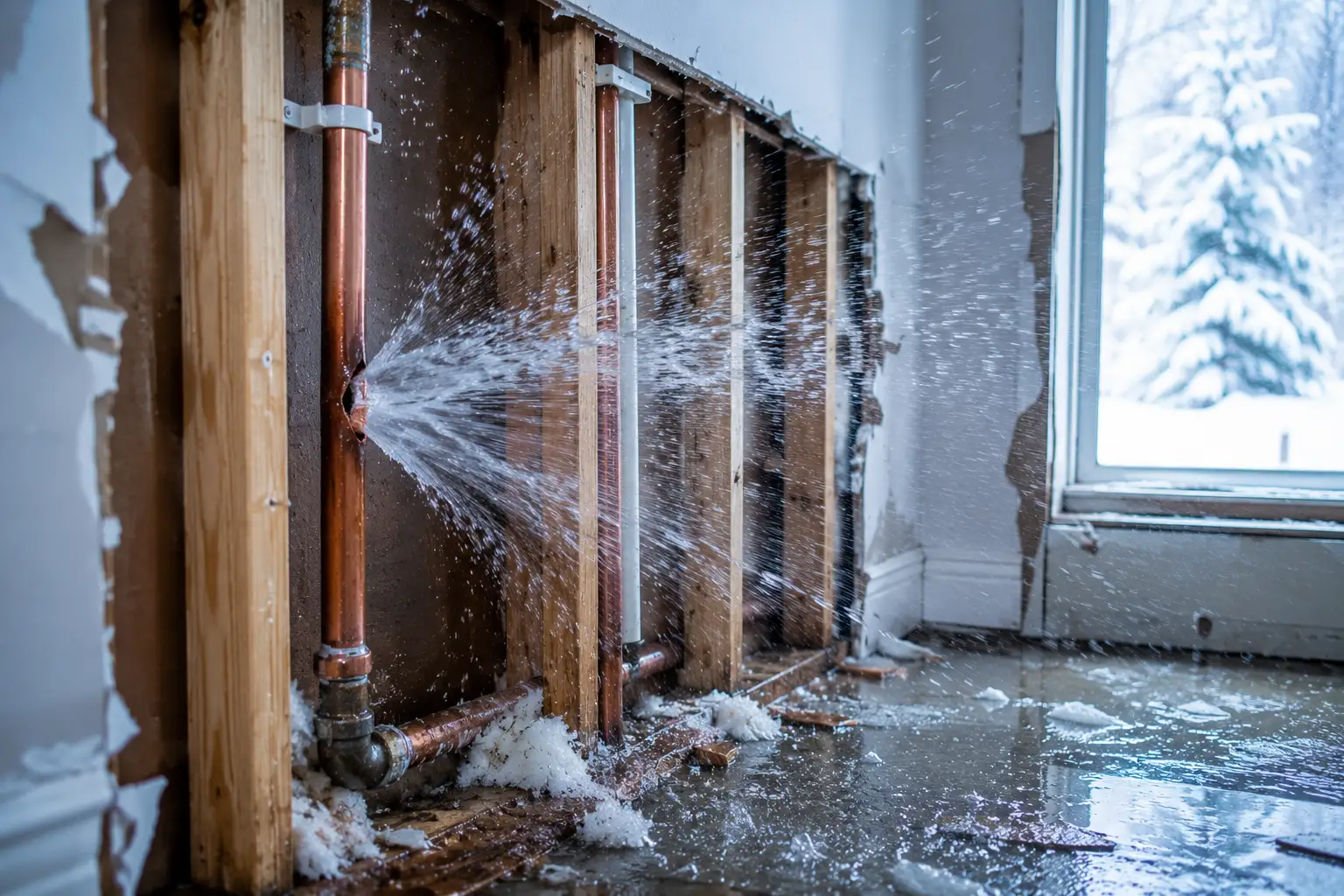
Frozen pipes in Pueblo burst because water expands as it freezes, and the pressure has nowhere to go. The fix is prevention: keep vulnerable pipes warm, let faucets drip on the coldest nights, and know how to thaw a line safely before it splits. If one has already burst, shut off your water and call for extraction fast.
Pueblo sits in southern Colorado’s high desert, where sunny afternoons can drop to hard overnight freezes in hours. That swing catches homeowners off guard every winter. Older homes across Belmont and central Pueblo often have exposed basement plumbing, and that is exactly where a frozen pipe turns into a flooded floor.
Why Pueblo’s Freezes Burst Pipes
Water is unusual. When it freezes, it expands by roughly nine percent, and inside a closed pipe that expansion builds enormous pressure. The ice itself rarely breaks the pipe at the freeze point. Instead, pressure builds downstream between the ice plug and a closed faucet until the weakest section splits.
Pueblo’s climate makes this worse than many people expect. Daytime highs can sit above freezing while nighttime temperatures plunge well below it. That daily freeze-thaw cycle stresses plumbing again and again through the coldest months. A single Arctic front rolling down the Front Range can freeze an unprotected pipe in a matter of hours.
Which Pipes Are Most at Risk
Not every pipe is equally exposed. The lines that freeze first are the ones with the least heat around them and the most cold air against them. In many Pueblo and Pueblo West homes, that means plumbing tucked into exterior walls, crawlspaces, and unheated spaces.
Older homes with basements deserve special attention. Basement ceilings and rim joists are common cold spots, and a pipe running along an outside foundation wall can freeze while the rest of the house stays warm. Knowing your weak points is half the battle.
At-Risk Location
Why It Freezes
How to Protect It
Exterior wall plumbing
Little insulation between pipe and cold outdoor air
Open cabinet doors, add pipe sleeves, let faucet drip
Crawlspaces
Vented, unheated, and exposed to ground-level cold
Insulate pipes, close vents in winter, add heat tape
Unheated garages
No heat source and often a supply line to a utility sink
Keep the garage door closed, insulate the line
Basement rim joists
Cold air enters where the foundation meets framing
Seal gaps, insulate the rim, keep basement heated
Outdoor hose bibs
Directly exposed and holding standing water
Disconnect hoses, shut off and drain the line
How to Prevent Frozen Pipes
Prevention is far cheaper than cleanup. A few simple habits protect most homes through even a hard Pueblo freeze. Start these before the first deep cold snap, not during it.
Insulate exposed pipes in crawlspaces, garages, and along basement walls with foam sleeves or heat tape.
On the coldest nights, let a faucet drip slowly. Moving water resists freezing and relieves pressure.
Open kitchen and bathroom cabinet doors so warm room air reaches pipes on exterior walls.
Disconnect and drain garden hoses, then shut off and drain outdoor hose bibs.
Keep your heat on, even when away, and never let the thermostat drop below 55 degrees.
Seal drafts near pipes, especially where lines pass through outside walls or the foundation.
Heading out of town during a cold stretch? Ask a neighbor to check the house daily, and consider shutting off the main water supply and draining the lines. A burst pipe in an empty home can run for hours before anyone notices.
How to Safely Thaw a Frozen Pipe
If you turn on a faucet and only a trickle comes out, a pipe is likely frozen. Act before it bursts, but never rush with an open flame. Work the thaw slowly and keep the faucet open so melting water can escape.
Open the faucet. Turn on the affected faucet so water can flow as the ice melts and pressure releases.
Find the frozen section. Follow the cold line to a spot that is frosty, bulging, or in a known cold area like an exterior wall.
Apply gentle heat. Use a hair dryer, a heating pad, warm towels, or a space heater kept at a safe distance.
Work from the faucet toward the freeze. Start near the open tap and move toward the blockage so melt water drains out.
Keep heat on it until full pressure returns. Continue warming until the faucet runs at normal flow, then check for leaks.
Never use an open flame. Torches and propane heaters risk fire and can damage the pipe. If you cannot reach the freeze, call a professional.
Signs a Pipe Already Burst
Sometimes the split happens before you catch the freeze. The signs are not always obvious, especially inside walls or under floors. Watch for the clues below.
Water stains, bubbling paint, or sagging on ceilings and walls.
A sudden drop in water pressure, or no water at all at a fixture.
Unusual sounds of running or dripping water when nothing is on.
A spike in your water bill or a musty, damp smell in a basement.
What to Do the Moment a Pipe Bursts
When a pipe fails, minutes matter. Fast action limits how far the water spreads and how much it soaks into floors and walls. Move through these steps calmly and in order.
Shut off the main water supply immediately to stop the flow.
Turn off electricity to any affected area if water is near outlets or panels.
Move furniture, rugs, and belongings out of the wet zone.
Open the burst faucet and drain remaining water from the line.
Document the damage with photos for your insurance claim.
Call for professional water extraction and drying right away.
Steel City Restoration is available 24/7 for burst-pipe emergencies across Pueblo, Pueblo West, Colorado City, Avondale, and Beulah. We offer free inspections, extract standing water, dry the structure, and can bill your insurer directly where your policy allows. For fast help, call (719) 467-3672. Read our guide on what to do in the first 24 hours of water damage while you wait.
The Water Damage and Mold That Follow
A burst pipe rarely ends when the water stops. Moisture wicks into drywall, subfloors, and insulation, and it hides there. Left alone, that dampness feeds mold within 24 to 48 hours.
This is why fast, thorough drying matters more than mopping up. Professional-grade air movers and dehumidifiers pull moisture out of materials you cannot see. If drying is delayed, you may face full water damage restoration in Pueblo and possible mold remediation. For storm-related freezes, our storm and frozen pipe response team can help too.
Frozen Pipes in Pueblo FAQs
At what temperature do pipes freeze in Pueblo?
Pipes are generally at risk when temperatures drop to 20 degrees Fahrenheit or lower, especially if lines are exposed in crawlspaces, garages, or exterior walls. In Pueblo’s high desert, overnight lows reach that range often in winter.
Should I leave faucets dripping all winter?
Only on the coldest nights, when temperatures are expected to fall below about 20 degrees. A slow drip keeps water moving and relieves pressure, which helps prevent a freeze and a burst.
Can I thaw a frozen pipe with a torch or open flame?
No. Open flames create a serious fire risk and can damage the pipe. Use a hair dryer, heating pad, warm towels, or a space heater kept at a safe distance instead.
How do I know if a frozen pipe has already burst?
Look for water stains, sagging drywall, a sudden drop in water pressure, running-water sounds when nothing is on, or a musty smell in the basement. A spike in your water bill is another warning sign.
What is the first thing to do when a pipe bursts?
Shut off the main water supply immediately to stop the flow. Then cut electricity to any affected area if water is near outlets, move belongings, and call for professional extraction.
How fast does mold grow after a pipe bursts?
Mold can begin to grow within 24 to 48 hours on wet materials. Fast, professional drying is the best way to stop it before it spreads inside walls and floors.
Does insurance cover a frozen pipe burst in Pueblo?
Many homeowner policies cover sudden burst-pipe damage, though coverage varies. Document everything with photos, and we can bill your insurer directly where your policy allows.
Which pipes freeze first in older Pueblo homes?
Pipes in exterior walls, crawlspaces, unheated garages, and along cold basement foundation walls freeze first. These spots have the least surrounding heat and the most exposure to cold air.
For most homes, structural drying typically takes about 3 to 5 days, while full restoration, including any rebuild work, often runs one to three weeks or longer. The exact timeline depends on how much water was involved, the materials affected, and how quickly the cleanup began. Every water damage job in Pueblo is a little […]
Water damage is sorted into three categories based on how contaminated the water is: Category 1 (clean water), Category 2 (gray water), and Category 3 (black water). The category measures health risk, not how much water there is. In Pueblo, a slow snowmelt seep and a sewage backup can flood the same amount of floor […]
The top signs of hidden mold in a Pueblo home are a persistent musty odor, visible spots or dark staining, water stains on walls or ceilings, warping or bubbling paint, allergy-like symptoms that ease when you leave the house, a history of past water damage, and high indoor humidity or condensation. Pueblo’s dry high-desert air […]
Water damage restoration cost in Pueblo is driven by the category of water, the size of the affected area, how long the water sat, the materials involved, and whether mold has started — which means only an on-site inspection gives you a real number. Two Pueblo homes with the “same” leak can cost very differently […]
Does homeowners insurance cover sewage backup in Colorado? Learn about the sewer/water backup endorsement, who's responsible (city vs. homeowner), how to file a claim, and why claims get denied.
Sewage backup in your Pueblo basement? Learn what to do first, the serious health risks of black water, what to throw away, and why professional cleanup is essential. 24/7 local response.