🚨 Water, fire or sewage emergency in Pueblo? We answer 24/7 — call (719) 467-3672
📚 Restoration Guide
How Much Does Water Damage Restoration Cost in Pueblo?
Water damage restoration cost in Pueblo is driven by the category of water, the size of the affected area, how long the water sat, the materials involved, and whether mold has started — which means only an on-site inspection gives you a real number. Two Pueblo homes with the “same” leak can cost very differently once walls, flooring, and drying time are factored in. That is why we offer a free inspection before anyone quotes you.
If you are searching for a price in Pueblo, you probably already have water where it should not be. The honest answer is that no reputable company can give you an accurate figure over the phone. Below we break down what actually moves the cost up or down, shown as qualitative tiers rather than invented dollar amounts.
The main cost drivers
Every water loss in Pueblo is a little different, but the same handful of factors decide what the job costs. Understanding them helps you read any estimate you receive.
Water category. Clean supply-line water is the least involved. Gray water from appliances is worse, and black water from sewage backups is the most demanding to handle safely.
Size of the affected area. A single closet is far cheaper than water that spread across a finished basement in Belmont or a whole main floor in Pueblo West.
How long it sat. Water that soaked for days migrates into more materials and raises both drying time and risk.
Materials affected. Tile and concrete dry quickly. Hardwood, carpet pad, drywall, and cabinetry often need removal or specialized drying.
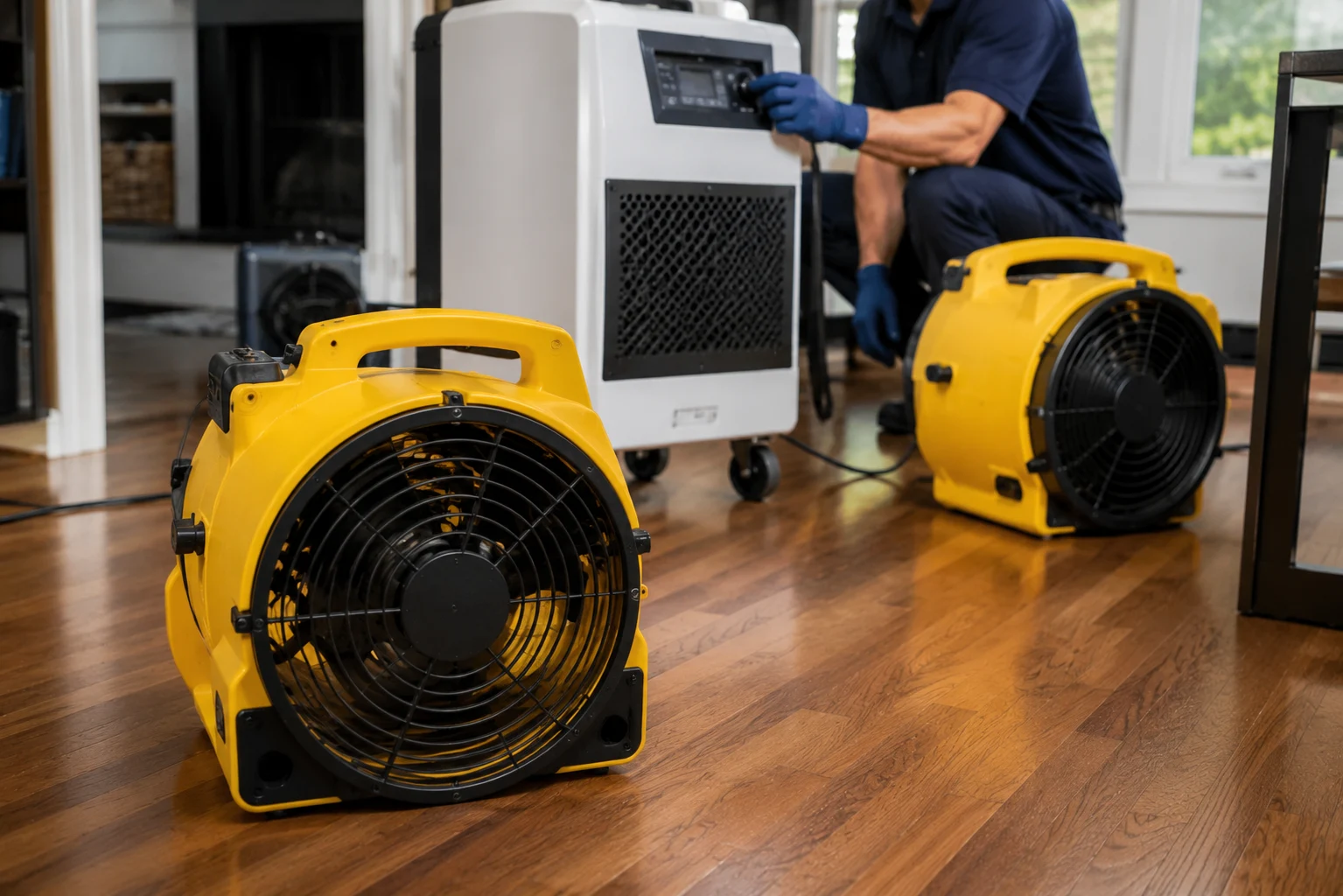
Drying time. More saturated materials mean more equipment running for more days.
Mold. If mold has started, remediation is a separate, added layer of work.
Water category matters most
The type of water is usually the single biggest factor. Clean water from a burst supply line is the simplest to extract and dry. Gray water from a dishwasher or washing machine carries contaminants and needs more careful cleaning.
Black water — the kind you get from a sewer backup — is the highest tier because it involves biohazards, protective handling, and disposal of porous materials it touched. If you are dealing with that, our sewage cleanup in Pueblo page explains the process. Contaminated water is never a job to tackle without proper equipment.
Size, saturation, and materials
After category, the footprint of the damage decides most of the cost. Water that stayed contained under a kitchen sink is a small job. Water that traveled down a hallway, under baseboards, and into an adjoining room in Colorado City is a much larger one.
Saturation matters just as much as square footage. A quick spill on tile may only need a day of air movement. Standing water absorbed into drywall, insulation, and carpet pad may require removal, disposal, and several days of controlled drying before anything can be rebuilt.
Typical ranges by loss type
Because Pueblo homes vary so much, we describe cost in tiers rather than dollar figures. The table below shows how different losses generally compare. Your actual number depends on the inspection.
Type of loss
Typical range (varies)
Small clean-water spill on hard flooring
Lower
Clean-water leak into drywall and carpet, one room
Moderate
Gray-water appliance failure, multiple materials
Moderate to higher
Large clean-water loss across several rooms or a basement
Higher
Sewage or black-water backup
Highest
Any loss with established mold growth
Higher to highest (added scope)
These tiers are relative to each other, not to any fixed price. A “moderate” loss in one Pueblo home can still surprise you once hidden saturation is uncovered behind a wall.
The single biggest cost variable you control is how fast you act. Water that is extracted within hours usually stays a “lower” or “moderate” job. The same water left overnight can climb a tier or two as it spreads and feeds mold.
How speed lowers your cost
Restoration cost rises with time because water keeps moving. Every hour it wicks further into flooring, drywall, and framing, which means more material to dry or remove. Fast extraction limits that spread and often keeps salvageable materials salvageable.
Speed also lowers the mold risk. Mold can begin developing within a day or two in the right conditions, and once it appears you are looking at mold remediation in Pueblo on top of the drying work. Our first steps guide, what to do in the first 24 hours, walks you through protecting your home before help arrives. We are available 24/7, so calling early is the cheapest move you can make.
Insurance and your out-of-pocket
Many water losses in Pueblo are covered by homeowners insurance, though coverage depends entirely on your policy and the cause of loss. Sudden and accidental events are commonly covered; long-term seepage and neglect often are not.
Your out-of-pocket portion usually comes down to your deductible and whatever your policy does not include. Where your policy allows, we can bill your insurer directly, which keeps the process simpler for you. We also document the damage thoroughly so your claim is well supported. For the full restoration workflow, see our water damage restoration in Pueblo page.
Why phone quotes are unreliable
A price quoted sight-unseen is a guess, and usually a bad one. Nobody can see behind your walls, under your flooring, or measure how much moisture has spread by talking on the phone.
A firm number that seems attractive on a call often changes once the crew arrives and finds saturation you could not see. An honest estimate in Pueblo comes after a real inspection with moisture meters, not before. That protects you from surprise charges later.
How to keep costs down
You have more control over the final bill than you might think. A few smart moves early can keep a Pueblo water loss from climbing tiers.
Shut off the water source and, if safe, the power to affected areas.
Call for extraction immediately instead of waiting to “see if it dries.”
Move furniture and belongings out of the water to protect them.
Photograph everything before cleanup for your insurance claim.
Do not run your home HVAC through contaminated water, which can spread it.
Let professionals handle drying so hidden moisture does not turn into mold.
Serving Pueblo, Pueblo West, Belmont, Colorado City, Avondale, and Beulah, we start with a free inspection so your estimate reflects your actual home. Reach us anytime at (719) 467-3672 or through our contact page.
Water Damage Restoration Cost FAQs
Can you give me a price over the phone?
No reputable company can give an accurate price over the phone. We need to see the water category, how far it spread, and which materials are affected before quoting a real number, which is why our inspection is free.
What makes water damage restoration more expensive?
The biggest drivers are the category of water, the size of the affected area, how long the water sat, the materials involved, the drying time required, and whether mold has already started.
Does homeowners insurance cover water damage in Pueblo?
Many sudden and accidental water losses are covered, but coverage depends entirely on your policy and the cause. Long-term seepage and neglect are often excluded, so check your specific policy.
How does acting fast lower my cost?
Fast extraction limits how far water spreads and keeps more materials salvageable. It also reduces the chance of mold, which would add a separate layer of work and cost.
Why is sewage cleanup the most expensive type of loss?
Sewage is black water, which carries biohazards. It requires protective handling, careful cleaning, and disposal of porous materials it touched, all of which add to the scope of the job.
Will you bill my insurance company directly?
Where your policy allows, we can bill your insurer directly to keep the process simpler for you. We also document the damage thoroughly to support your claim.
Do you charge for the inspection?
No. We offer a free inspection so your estimate is based on the actual condition of your home rather than a phone guess.
What should I do before your crew arrives?
Shut off the water source, and the power to affected areas if it is safe. Move belongings out of the water, photograph everything for your claim, and call us right away at (719) 467-3672.
For most homes, structural drying typically takes about 3 to 5 days, while full restoration, including any rebuild work, often runs one to three weeks or longer. The exact timeline depends on how much water was involved, the materials affected, and how quickly the cleanup began. Every water damage job in Pueblo is a little […]
Water damage is sorted into three categories based on how contaminated the water is: Category 1 (clean water), Category 2 (gray water), and Category 3 (black water). The category measures health risk, not how much water there is. In Pueblo, a slow snowmelt seep and a sewage backup can flood the same amount of floor […]
The top signs of hidden mold in a Pueblo home are a persistent musty odor, visible spots or dark staining, water stains on walls or ceilings, warping or bubbling paint, allergy-like symptoms that ease when you leave the house, a history of past water damage, and high indoor humidity or condensation. Pueblo’s dry high-desert air […]
Frozen pipes in Pueblo burst because water expands as it freezes, and the pressure has nowhere to go. The fix is prevention: keep vulnerable pipes warm, let faucets drip on the coldest nights, and know how to thaw a line safely before it splits. If one has already burst, shut off your water and call […]
Does homeowners insurance cover sewage backup in Colorado? Learn about the sewer/water backup endorsement, who's responsible (city vs. homeowner), how to file a claim, and why claims get denied.
Sewage backup in your Pueblo basement? Learn what to do first, the serious health risks of black water, what to throw away, and why professional cleanup is essential. 24/7 local response.